
The Ultimate HVAC Filter
A dramatic upgrade for indoor air quality combined with reduced energy consumption.
The next generation of HVAC filtration is here
Why it’s the ultimate filter
- Lower resistance means reduced fan energy consumption
- Whole-building air purification through existing HVAC systems
- UL2998 ozone certifiedExceeds:
- ASHRAE 241 formaldehyde
- ASHRAE 241 filtration
- ASHRAE 62.2 & 62.1 filtration
- Ultrafine capture down to .001 µm
- Captures:
- Wildfire smoke
- Industrial and transportation pollutants
- Micro/nano plastics
- Viruses including COVID
- …and much more
Just imagine
At last: real air purification for homes or buildings of any size. Real protection for our health and improved well being.
- Imagine knowing your home is protected from dangerous air pollutants.
- Imagine schools where children and teachers have fewer sick days from colds and flu.
- Imagine hospitals with fewer emergencies.
- Imagine workplaces with fresher, cleaner air and fewer sick days.
- Imagine seniors living longer, healthier lives.
- Imagine cities where indoor air is no longer the silent health threat that it is today.
Protecting you from ultrafine particles includes wildfire and other smoke, viruses and allergens, airborne nanoplastics, transportation pollutants, and even radon decay products (RDP).
The particles that matter most are the ones you can’t see.
Air pollution is a leading environmental risk factor for early death and disability worldwide. Much of that risk sits in ultrafine airborne particles, too small to see, too small to regulate, and never what traditional filters were built to stop.
Traditional pleated filters were never designed to stop ultrafine particles, which means they are doing little to protect your health when indoors.
During a wildfire smoke event or other significant air pollution event, the sheer number of these particles in the air can spike dramatically.
Your HVAC filter isn’t protecting you.
Ultrafine particles exist in staggeringly high numbers in the air we breathe. These particles, because of their size, can enter your bloodstream, reach your organs, and drive chronic disease development.
Pleated filters were never designed to capture particles in this size range. Most ultrafine particles pass straight through the fabric of every conventional pleated filter, leaving them airborne to be inhaled.
While HEPA is proven technology for standalone room air purifiers, centralized HVAC systems are needed to move and filter massive air volumes across entire buildings. HEPA’s extremely high pressure drop and cost make it an impractical solution for filtration at that scale. A fundamentally different approach is required.
See how Electronic Polarization Filtration worksMERV ratings don’t quantify the most dangerous particles
The MERV scale measures down to 0.3µm. Ultrafine particles as defined by PM0.1 are linked to respiratory and cardiovascular diseases, cancer, and various forms of neurological issues, are completely outside its scope.
Wildfire smoke, plastics & radon are surging
Ultrafine particles from wildfire smoke, transportation sources, airborne nanoplastics, and radon decay products (RDP) are all threats increasing in frequency, and your HVAC filter isn’t stopping them.
- Wildfire smoke
- Transportation
- Nanoplastics
- Radon decay products
High-performance pleated filters waste energy
Pleated filters clog quickly, increasing airflow resistance week over week. HVAC fans work harder and harder, driving up hydro bills and straining equipment across every zone.
Most commercial buildings don’t comply with ASHRAE 241
The vast majority of commercial buildings use MERV 4-8 filters which do not comply with ASHRAE 241 requirements.
What is an ultrafine particle?
An ultrafine particle is smaller than 0.1 micrometres, 100 nanometres. That is small enough to change everything about how it behaves in air, in your building, and in your body.
Mass says clean. Count says otherwise.
Regulatory frameworks have historically relied on mass-based metrics such as PM10 and PM2.5. Because ultrafine particles are smaller than 0.1 micrometres, they possess virtually zero mass, so a room can measure deceptively “clean” on a mass-based monitor while carrying enormous numbers of them.
Your body is not weighing the dust entering your lungs. It is reacting to how many individual foreign particles are invading cellular pathways.
Small enough to behave like a gas.
Ultrafine particles move via erratic, random Brownian motion and stay suspended almost indefinitely, rather than settling out of the air over hours the way heavier particles do.
Their size lets them bypass the respiratory system’s normal defences and cross the alveolar–capillary membrane directly into the bloodstream, travelling to vital organs including the heart and brain.
Every day, we inhale millions of them. They accelerate aging, increase disease, and shorten lives.
PM2.5 vs. ultrafine particles, a side-by-side comparison
| Characteristic | PM2.5, fine particles 2.5µm down to 0.1µm | PM0.1, ultrafine particles below 0.1µm (<100nm) |
|---|---|---|
| Indoor prevalence | Can be elevated, but often tied to heavier dust, tracked-in soils, or localized shedding. | Massively concentrated indoors due to common household activities (cooking, gas appliances, vaping, heating) and outdoor sources, wildfire smoke, nanoplastics, traffic-related pollutants, radon RDP. |
| Behaviour in air | Settles slowly out of the air via gravity over hours; carried reliably by standard directional air currents. | Acts more like a gas; moves via erratic, random Brownian motion; stays suspended almost indefinitely. |
| Biological interaction | Penetrates deep into lung alveoli; a portion is trapped or cleared by macrophage cells. | Bypasses lung defences entirely; crosses the alveolar–capillary membrane directly into the bloodstream to vital organs including the brain. |
| Toxicity payload | Carries moderate chemical burden relative to its mass. | Functions as a potent “Trojan horse”, its massive surface-area-to-volume ratio acts as a sponge, concentrating heavy toxins and organic compounds directly into cellular tissue. |
Why ultrafine particles carry more than their size suggests
- Massive surface area, at nano-scale, ultrafine particles have an exponentially larger surface area relative to their volume.
- Adsorbed toxins, that surface area acts like a sponge, allowing them to adsorb heavy metals, polycyclic aromatic hydrocarbons (PAHs), and combustion byproducts from traffic or industrial sources.
- Cellular translocation, small enough to act more like a gas than a solid, they cross into the bloodstream, can travel up the olfactory nerve into the central nervous system, and lodge inside cellular tissue, carrying their chemical payload to the heart and brain.
Why ultrafine particles are largely unregulated
Ultrafine particle concentrations fluctuate drastically over very short distances, spiking intensely beside a highway and dropping off sharply within a hundred metres, which has made national-scale monitoring an immense logistical hurdle.
Currently, neither the EPA nor most global jurisdictions have legally binding ambient air quality standards dedicated specifically to particle number concentration rather than mass concentration. Society regulates the heavier visible soot that drags down a filter’s weight, while the invisible, high-count nano-pollutants carrying the heaviest chemical toxicity remain largely unmonitored.
Where indoor ultrafine particles come from
Alongside outdoor sources, everyday indoor activities generate a massive spike in particle number concentration: searing food on a stovetop, burning toast, operating a natural gas furnace, using a toaster, burning candles, or running a space heater.
Because modern homes are built tight for energy efficiency, these nano-scale pollutants remain trapped indoors, building up to staggering particle counts. Standard residential HVAC filters are engineered to catch larger debris and a fraction of PM2.5, so standard home systems churn ultrafine particles back into the living space continuously.
Most homes and buildings are equipped with filters that cannot stop these microscopic particles. We’ve been fighting the real enemy with the wrong tools.
We can fix that.
Electronic Polarization Filtration doesn’t force air through smaller and smaller pores. It uses physics, an electric polarized field, to pull particles out of the air.
- Captures the pollutants that matter most
- Protects the HVAC systems that keep us comfortable
- Reduces the energy needed to move air
- Can improve the health of entire communities
Electronic Polarization Filtration: Doing what pleated filters can’t.
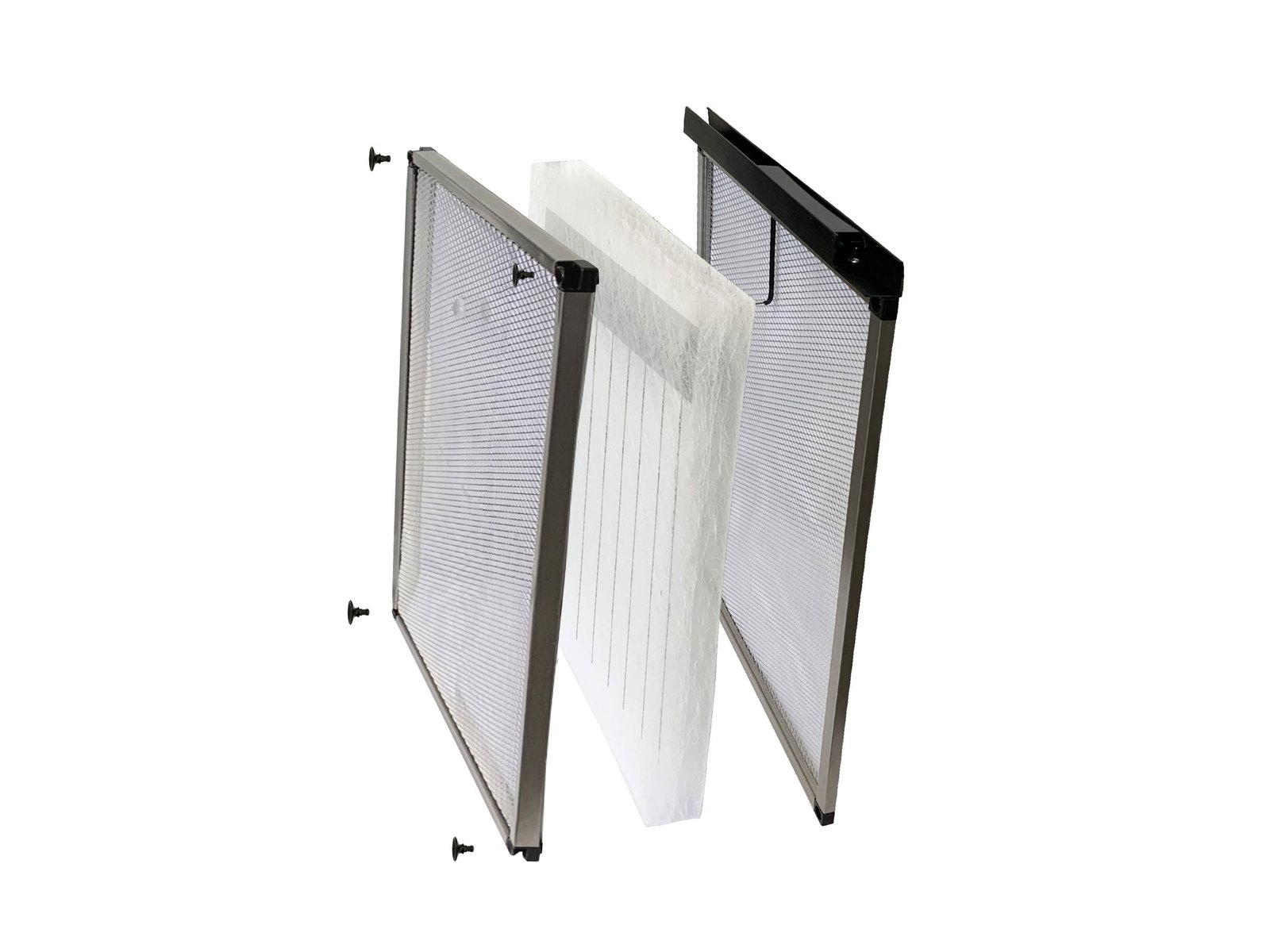
Patented powered pad technology. No dense fabric to push air through. Full pad enhanced attraction leaves nothing for an ultrafine particle to slip past.
- 1Air entersBuilding air is drawn into the air handler.
- 2The pad is chargedA low amperage 24V source creates a polarized electric field across the pad, which charges airborne particles as they pass.
- 3Particles meet the fieldParticles passing through the loose weave pad are charged by the field.
- 4Particles are heldCharged particles are drawn to the media and held there.
- 5Cleaner air continuesAir carries on through the HVAC system at low resistance.
Charge is applied
A 24V source is used to charge the replaceable media pad, creating a polarized electric field across the entire pad surface. It consumes just 2 watts of power per hour for each unit.
Particles are attracted, not blocked
Instead of blocking particles with dense fabric, the now-charged particles, including ultrafine ones, are drawn to the media and held. Viruses are both held and inactivated by the filter.
Low resistance means less energy used
Air flows freely through the loose weave pads. Static pressure stays consistently low. The filter loads far more slowly than pleated filters, so fans work less and hydro bills drop month after month.
Reserved for further technical or descriptive imagery.
The pollutants other filters were never designed for.
EPF protects your health by capturing the most dangerous air pollutants! The ones that traditional pleated filters were never designed to. Particulate of all sizes, including ultrafine, down to .001 microns.
- VirusesCOVID, colds and flu
- SmokeFire, cooking and vaping
- OdorsAirborne organic compounds
- MicroplasticsAirborne nanoplastics
- AllergensPollen and other irritants
- BacteriaAirborne microbial matter
- Fine dustPM2.5 and finer
- Radon decay productsRDP
Up to 50% more effective
than even a HEPA air purifier at eliminating ultrafine particulate**
Based on independent comparison testing. Test details available on request.
It is time to make your home the safe haven it was meant to be.
Illustrative comparison of how fan power behaves as a filter loads. Actual figures depend on your equipment, airflow and baseline.
Lower resistance. Lower energy bills. Every month.
Unlike pleated filters that load quickly, forcing your fan to work harder week over week, ECOairflow’s low density pads load slowly, maintaining near-constant airflow resistance throughout their service life.
- Fan affinity law advantage, even small reductions in static pressure produce disproportionately large reductions in fan energy, because power scales with the cube of fan speed.
- Permanent frame, lower lifetime cost, the aluminum frame is a one-time capital cost. Only the media pad is replaced periodically, reducing the cost of discarding and replacing full pleated frames.
- The higher your current MERV, the bigger the savings, buildings upgrading from MERV 8, 11, or 13 see the greatest energy advantages. ROI typically achieved in 1-2 years. Thereafter, the savings accumulate for the life of the HVAC system.
EPF protects the HVAC system by reducing the energy needed to move air. Over time, the energy savings will pay for your investment in your health.
Model the savings for my buildingHVAC filtration: conventional vs. ECOairflow
The only comparison that matters is ECOairflow against the pleated filters actually running in your air handlers right now.
The filter in your air handler now
- Cannot capture ultrafine (PM0.1) particles
- Efficient filtration stops below PM2.5
- Clogs quickly, pressure drop rate rises constantly
- Fan energy climbs as filter loads
- Complete filter with frame discarded at every change
- Cannot inactivate viruses
A different filtration mechanism
- Charges and collects particulate of all sizes, including ultrafine down to .001 microns
- Open, low-resistance media, no dense fabric to force air through
- Static pressure stays low; the filter loads far more slowly
- Permanent aluminum frame, only the replaceable media pad is changed
- Built for the air volumes of central HVAC systems
- Filters hold and inactivate viruses
- UL2998 certified Ozone Free
One technology. Every application.
Unique EPF core in three different frames. Each configured to the building it has to serve.
Dynamo™ 1″
Providing whole-home purification through your existing furnace or fan coil. Captures what standalone room purifiers handle one room at a time, building-wide, from a single filter slot.
- PM0.1 capture 74.73%
- vs. HEPA at PM0.1 +50% better
- Power draw 24V / 2W
- Certifications UL2998 / UL867 / CSA
- Sizes All standard + custom
- Emissions Zero ozone / formaldehyde
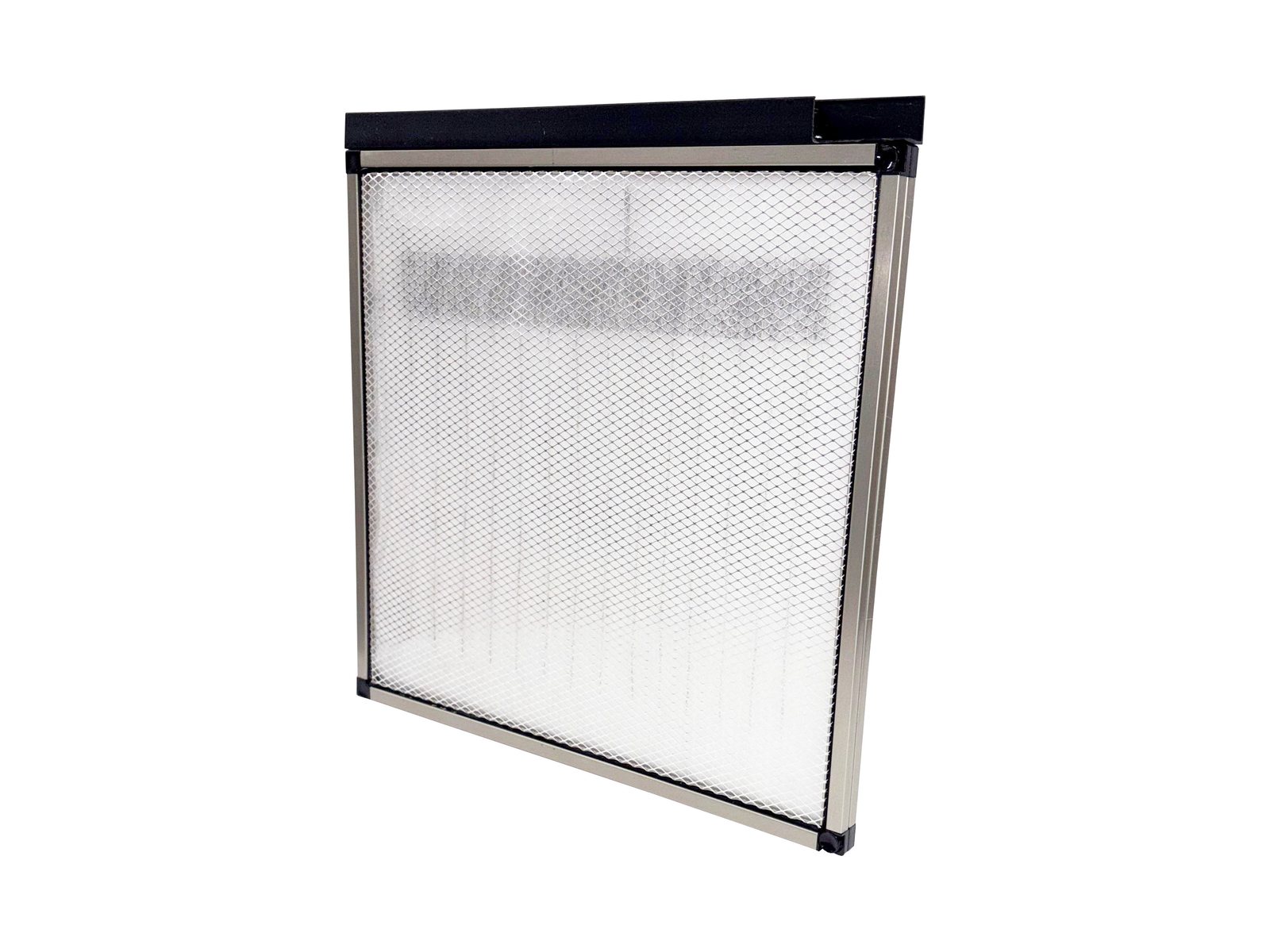
Model 2300™ 2″
The commercial workhorse. Designed for 500+ FPM air handlers. MERV 14 performance with dramatically lower pressure drop, and energy savings that compound over the lifetime of your HVAC system.
- MERV rating 14
- PM0.1 capture 74.73%
- Face velocity 500+ FPM
- Daisy-chain capable Yes
- Certifications UL2998 / UL867 / CSA
- Sizes All standard + custom
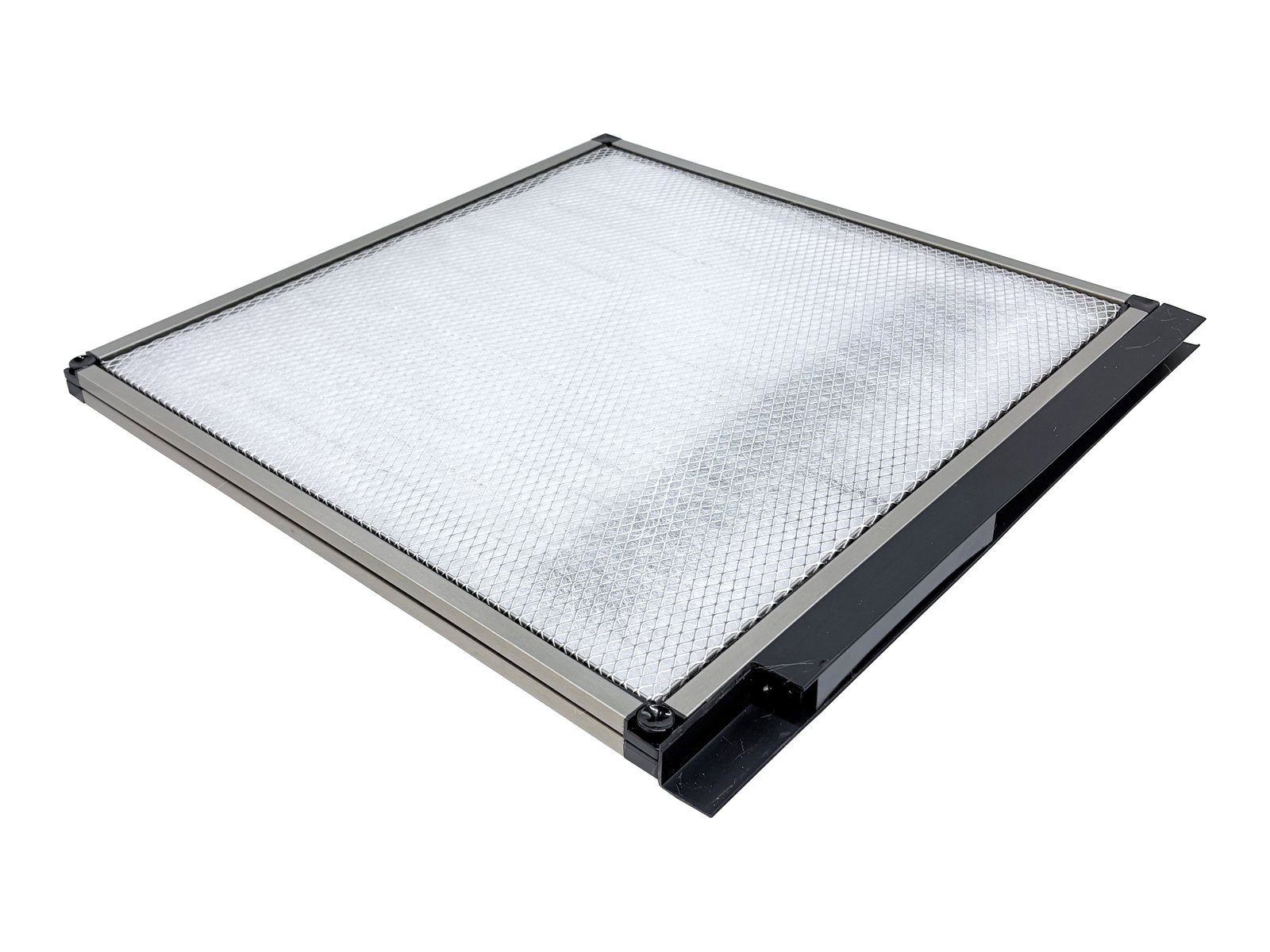
M-Series™ 2″
For any application requiring Appendix J certification or high efficiency filtration, including hospitals, operating rooms, labs, data centres, and any building or zone requiring that standard.
- MERV rating 13A / 14A / 16A
- PM0.1 capture 74.73%
- Face velocity 500+ FPM
- Certification Appendix J
- Standard ASHRAE 170 / CSA Z317.2
- Certifications UL2998 / UL867 / CSA
- Daisy-chain capable Yes
- Sizes All standard + custom
Built for every building that cares about air.
The same core technology, specified differently for the room class it has to protect.

Hospitals & Healthcare
M-Series Appendix J certified for surgical suites, labs, and clinical environments requiring ASHRAE 170 compliance.
Explore
Commercial Buildings
ASHRAE 241 compliant IAQ solutions for offices, towers, and multi-tenant facilities, with energy payback typically inside 2 years.
Explore
Schools & Institutions
Healthier learning environments with fewer sick days, lower absenteeism, and research-backed improvements in cognitive performance.
Explore
Hotels & Hospitality
Cleaner rooms, measurably reduced HVAC operating costs, and a guest air quality experience that's genuinely different.
Explore
Residential
Dynamo 1″ drops into any existing furnace or fan coil slot, providing whole-home purification from the first day of operation.
Explore
Industrial & Logistics
High-volume air handlers benefit most from sustained low-pressure-drop filtration, with energy savings compounding at scale.
ExploreElectronic Polarization Filtration is more than a technology.
ECOairflow is bringing Electronic Polarization Filtration to homes, businesses, and communities everywhere, one building, one breath, at a time.
- A public health breakthroughAddressing the pollutants that reach the bloodstream and the brain.
- An energy efficiency upgradeLow resistance means the fan moving your air works less.
- A building performance enhancementCleaner air handled by the system already installed in the building.
- A societal interventionHomes, schools, workplaces, hospitals and cities, at scale.
- And it’s available todayEPF is shipping now across residential and commercial applications.
Ready to breathe differently?
Talk to an ECOairflow specialist about your building’s HVAC configuration, energy baseline, and IAQ goals. No obligation, just clarity on what’s possible.