Introduction
Walk down any hardware store's filter aisle and the options are overwhelming — fiberglass, pleated, MERV 8, MERV 13, washable, electrostatic. Most shoppers grab whatever's cheapest and move on. That decision carries real consequences: according to the US EPA, Americans spend approximately 90% of their time indoors, where concentrations of some pollutants are often 2–5 times higher than typical outdoor levels — and the filter running in your furnace is one of your primary defenses against them.
Electrostatic filters use static charge to attract and trap airborne particles that standard fiberglass filters simply let pass. But not all electrostatic filters work the same way — and the differences matter for your health, your HVAC system, and your long-term costs.
This comparison covers five top picks across three filter categories: active powered electronic filters, high-MERV passive disposable filters, and washable reusable filters. By the end, you'll know which filter type fits your situation, what performance benchmarks actually matter, and where each product falls short.
Key Takeaways
- MERV 13+ is the EPA-recommended minimum for capturing fine particulates, smoke, bacteria, and viruses
- Active powered electronic filters outperform passive electrostatic types in filtration performance and energy use
- Washable filters eliminate replacement costs but deliver lower filtration performance (MERV 5–8 range)
- Verify UL2998 Zero Ozone Certification before buying any active electronic filter — ozone-emitting devices fail EPA, NIOSH, and CARB safety standards
- Confirm your HVAC system's maximum MERV rating before upgrading — filters rated too high can restrict airflow and strain your equipment
What Makes Electrostatic Furnace Filters Different?
Passive vs. Active: The Core Distinction
Standard fiberglass filters block large debris through physical interception. That's it. Most pleated filters improve on this by adding more surface area, and medium-to-high MERV pleated filters incorporate an electrostatic charge — generated by airflow moving through the filter layers — to boost particle attraction. This is passive electrostatic filtration: no power required, charge generated purely by air movement.
Active powered electronic filters work differently. Instead of waiting for airflow to generate a charge, they apply a small electrical current to polarize particles at the molecular level before capture. The result is measurably higher efficiency in the ultrafine particle range (particles below 0.1 microns) — a size range passive filters largely miss.
Key Trade-Offs at a Glance
| Filter Type | MERV Range | Ongoing Cost | Best For |
|---|---|---|---|
| Active powered electronic | MERV 11–16 | Replacement pads (~quarterly) | Maximum filtration + energy savings |
| High-MERV disposable passive | MERV 13–16 | New filter every 60–90 days | Most residential settings |
| Washable passive electrostatic | MERV 5–8 | Near zero (just water) | Minimal allergen concerns, tight budgets |
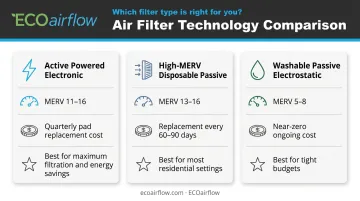
The electrostatic charge in passive pleated media dissipates over time — especially during wildfire smoke events or in homes with smoking. A filter rated MERV 13 at installation can drop well below that threshold after several weeks of heavy particulate loading, offering far less protection than its label suggests.
Best Electrostatic Air Filters for Furnaces: Top Picks Compared
These five filters represent the full range of electrostatic filtration available, selected based on filtration performance, HVAC compatibility, ozone safety, maintenance requirements, and overall value.
ECOairflow Electronic Polarized Air Filter
ECOairflow manufactures active electronic air filtration systems for residential, commercial, and healthcare applications across North America, with production based in Oshawa, Ontario. Their filters use patented Electronic Polarization Technology (EPT), which actively charges particles at the molecular level rather than relying on airflow-generated static.
The residential lineup covers three models:
- Dynamo 1" — MERV 12, captures particles to 0.001 microns, pressure drop of 0.11 in.w.c. @ 300 FPM, lifetime electronics warranty
- Model 1500 — MERV 12, captures to 0.007 microns, pressure drop of 0.13 in.w.c. @ 300 FPM, 5-year warranty
- Model 1000 — MERV 11, captures to 0.001 microns, pressure drop of 0.18 in.w.c. @ 300 FPM, 5-year warranty
For commercial and hospital-grade applications, the M-Series 2" Hybrid achieves MERV 13–16 under ASHRAE 52.2, including Appendix J protocol. That means rated performance holds whether powered, unpowered, or tested under the most rigorous third-party conditioning protocol.
All models carry UL2998 Zero Ozone Verification (Intertek ETL certified) and operate on just 2 watts or less. Replacement pads ship direct via subscription through ECOairflow's online store.
| Spec | Detail |
|---|---|
| MERV Rating | MERV 11–12 (residential); MERV 13–16 (commercial M-Series) |
| Filter Type | Active powered electronic (EPT) |
| Best For | Health-sensitive households, commercial facilities, maximum filtration with zero ozone |
Lennox X6672 Healthy Climate
The Lennox X6672 is a premium 5-inch pleated filter designed for the Lennox HCC16-28 cabinet. It measures 16" × 25" × 5" nominal (actual: 15-3/4" × 24-3/4" × 4-3/8"). This is a non-standard size, so confirm compatibility before purchase.
It carries a MERV 16 rating, the highest on the residential scale, with Lennox-rated efficiency of 95% for E1 particles (0.3–1.0 microns), 99% for E2, and 100% for E3. Replacement interval is up to 12 months. At roughly $90 per filter (OEM 2-pack listed at approximately $179.99), it's worth the price where the compatible system already exists.
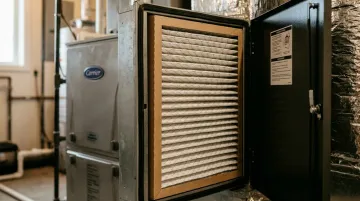
Note: Lennox's official documentation supports compatibility with the HCF16-16/HCC16-28 cabinet. Cross-brand compatibility claims seen on some listings reflect aftermarket replacements, not official Lennox specifications.
| Spec | Detail |
|---|---|
| MERV Rating | MERV 16 |
| Filter Type | Disposable passive electrostatic pleated |
| Best For | Allergy and asthma sufferers with compatible Lennox systems seeking peak passive filtration |
Filtrete MPR 1900 (MERV 13)
Made by 3M, the Filtrete MPR 1900 is among the most widely available MERV 13 filters on the market. It's sold in standard sizes across major retailers. A single 16x25x1 runs approximately $34, and it's one of the few MERV 13 options verified in the California Energy Commission database for pressure drop performance.
The EPA recommends at least MERV 13 for capturing fine particulates including smoke, bacteria, and airborne viruses — and the MPR 1900 hits that threshold without an unusual pressure drop that would strain most residential HVAC systems.
One limitation: the electrostatic charge in pleated electret media can diminish over time, particularly during wildfire events or with cigarette smoke exposure. 3M recommends replacement every 90 days under normal conditions, and keeping a spare on hand during wildfire season.
| Spec | Detail |
|---|---|
| MERV Rating | MERV 13 |
| Filter Type | Disposable passive electrostatic pleated |
| Best For | Homeowners wanting a widely available, affordable MERV 13 filter with low system strain |
BNX TruFilter (MERV 13)
BNX TruFilter offers electrostatically charged MERV 13 pleated filters in a full range of standard sizes, available in 2-, 4-, and 6-packs. The manufacturer claims capture of up to 98% of airborne particles including bacteria, viruses, smoke, mold, and pet dander. That's a broad manufacturer claim, not a certified per-particle-type result.
The price difference is straightforward: a 4-pack of 16x25x1 runs approximately $41.39 on Amazon ($10.35 per filter), compared to roughly $34 for a single Filtrete MPR 1900. For households buying in bulk on a 90-day replacement schedule, the per-filter cost difference adds up quickly.
BNX is US-made and ships in recycled cardboard packaging. No washable option exists in this lineup.
| Spec | Detail |
|---|---|
| MERV Rating | MERV 13 |
| Filter Type | Disposable passive electrostatic pleated |
| Best For | Budget-conscious buyers wanting strong filtration in standard sizes |
Trophy Air 6-Stage Washable Filter
The Trophy Air is a permanently reusable washable electrostatic filter constructed from heavy-duty aluminum. Made in the USA, it's designed for indefinite use with regular cleaning. Six-stage construction runs air through four aluminum layers and two electrostatically charged media layers.
Current Amazon listings report a seller-stated MERV 8 rating, though no independent ASHRAE 52.2 certification was verified for this product. A 16x25x1 size runs approximately $55–57.
The clear benefit: zero replacement cost after the initial purchase. Rinse, dry, reinstall. For generally healthy households with limited allergen concerns, this math makes sense over a 5-year period.
MERV 8 will not meaningfully capture bacteria, viruses, or fine wildfire smoke particles. Anyone with respiratory conditions, pets, or regular wildfire smoke exposure should look elsewhere.
| Spec | Detail |
|---|---|
| MERV Rating | MERV 8 (seller-reported; no independent ASHRAE certification verified) |
| Filter Type | Washable/reusable passive electrostatic aluminum |
| Best For | Homeowners prioritizing zero replacement cost who can accept lower fine-particle filtration |
How to Choose the Right Electrostatic Furnace Filter
MERV Rating and Household Needs
The ASHRAE 52.2 MERV scale runs from 1 to 16. Here's what each range actually means in practical terms:
- MERV 1–7 — Protects HVAC equipment only; captures large debris, minimal IAQ benefit
- MERV 8–11 — Handles common allergens: pollen, dust mites, mold spores
- MERV 13+ — Recommended by the EPA for fine particulates, smoke, bacteria, and airborne viruses
- MERV 14–16 — Hospital-grade performance; typically requires purpose-built systems
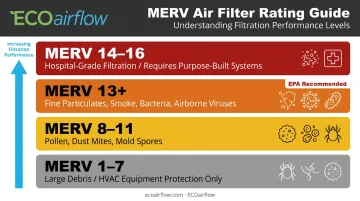
Before upgrading to MERV 13 or higher, check your furnace manufacturer's manual for a maximum recommended MERV rating. High-MERV filters add airflow resistance — in fixed-speed systems, that means the fan works harder and energy costs rise.
Filter Type vs. Use Case
| Household Situation | Recommended Approach |
|---|---|
| Pets, allergies, asthma, or wildfire smoke | MERV 13+ disposable — or an active electronic air cleaner with PM0.1 capture (see note below) |
| Most healthy residential settings | MERV 13 disposable like Filtrete MPR 1900 or BNX TruFilter |
| Minimal allergen concerns, tight budget | Washable passive filter (e.g., Trophy Air); filtration tops out at MERV 8 |
A note on active electronic filters: ECOairflow's residential lineup is rated MERV 11–12 on the standard scale, but independent testing documents 74.73% capture of PM0.1 ultra-fine particles — the size range where passive mechanical filters struggle most. That performance comes at a lower pressure drop than dense pleated media, which reduces HVAC fan energy consumption over time. For households prioritizing ultra-fine particle capture alongside lower operating costs, that trade-off is worth understanding before defaulting to a MERV rating alone.
Ozone Safety and Certifications
Some active electrostatic and ionizing filters produce ozone as a byproduct — which can irritate lungs and worsen asthma. Before purchasing any active electronic filter, look for:
- UL2998 Zero Ozone Verification (tested by Intertek/ETL to below 0.005 ppm)
- CARB compliance (California Air Resources Board — required for California sales, a useful benchmark everywhere)
Passive pleated electrostatic and washable filters do not use active ion generation and do not produce ozone. This concern applies specifically to powered active electronic filters. ECOairflow holds Intertek ETL certification to UL2998 — independently verifying zero ozone output, which matters most if you're comparing active electronic options.
Size and Installation
Once you've confirmed the right filter type and certifications, sizing is your final check before ordering.
Look at your existing filter's nominal dimensions — printed on the filter frame edge. That nominal size is always slightly larger than the actual filter, so don't order by measuring the opening directly.
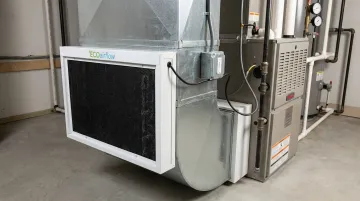
For active powered electronic air cleaners, you'll need a 24-volt electrical connection at the filter housing location. ECOairflow recommends professional HVAC contractor installation for initial setup; pad replacement afterward is entirely tool-free.
Conclusion
The best electrostatic furnace filter depends on your household's filtration priorities, HVAC system capability, and long-term cost tolerance — not simply the highest MERV number on the box.
For most homes seeking a meaningful, low-effort upgrade, a MERV 13 disposable like the Filtrete MPR 1900 or BNX TruFilter is a solid, cost-effective choice.
For households wanting maximum fine-particle capture, verified zero ozone output, and lower HVAC operating costs, ECOairflow's residential lineup operates in a different category entirely — capturing ultrafine particles below PM0.1 that standard MERV ratings don't test for.
ECOairflow President Jeff Chesebrough welcomes questions from customers and HVAC professionals about which model fits their specific setup. Reach him at jeff@ecoairflow.com or toll-free at 1-877-347-3569, or visit ECOairflow's About Us page to start the conversation.
Frequently Asked Questions
Are electrostatic furnace filters better?
Yes. Electrostatic filters outperform basic fiberglass filters and match or exceed mid-range pleated options. Active powered electronic filters — like ECOairflow's EPT models — capture finer particles than passive types, while washable passive filters save replacement costs at the expense of lower MERV performance.
What is the best filter for airflow in a furnace?
A MERV 13 filter with a high pleat count increases surface area and reduces airflow resistance. Active powered electronic filters go further: ECOairflow's Dynamo 1" maintains high filtration at just 0.11 in.w.c. pressure drop (300 FPM), cutting HVAC fan energy while keeping performance high.
What MERV rating should I use in my furnace?
MERV 8–11 works for most healthy households with limited allergen concerns. MERV 13 is the EPA-recommended starting point for households with pets, allergies, asthma, or wildfire smoke exposure. MERV 14–16 typically requires a purpose-built system — always check your furnace manufacturer's maximum rating first.
Do electrostatic furnace filters produce ozone?
Passive electrostatic filters — washable and disposable pleated types — do not produce ozone. Some active powered electronic filters can generate trace ozone as a byproduct. Look for UL2998 Zero Ozone Verification (Intertek ETL certified) to confirm a product has been independently tested and meets the sub-0.005 ppm standard.
How often should you clean or replace an electrostatic furnace filter?
It depends on the filter type:
- Washable passive filters: clean every 1–3 months based on dust levels and pet traffic
- Disposable MERV 13 filters: replace every 60–90 days; sooner during wildfire events or if smoking occurs in the home
- Active electronic filter pads (such as ECOairflow's): quarterly replacement, with direct-ship subscription available
Can electrostatic filters work with any furnace?
Passive electrostatic filters fit most furnaces that accept standard 1-inch sizes. Active powered electronic filters require a 24-volt electrical connection at the filter housing, so a professional installation check is advisable. Always confirm your HVAC manufacturer's maximum MERV rating before upgrading.