Can HEPA filters help with asthma?
Yes — HEPA-grade filtration significantly reduces airborne asthma triggers like dust mites, pollen, pet dander, mold spores, and fine particulates. ECOairflow's EPT electronic air cleaners are UL 2998 Zero Ozone Verified, making them safe for asthma sufferers. They capture particles down to 0.001 microns, outperforming standard HEPA at the ultra-fine particle range most linked to respiratory irritation.
Are HEPA furnace filters worth it?
For whole-home air quality, a HEPA-grade electronic air cleaner like ECOairflow is highly worth it. Unlike passive HEPA filters with high pressure drops that strain HVAC systems, ECOairflow's EPT units operate at 0.11–0.18 in.w.c. — saving up to 15% in annual energy costs while capturing particles twice as effectively as conventional HEPA at the ultra-fine PM0.1 range.
What MERV rating do ECOairflow filters achieve?
ECOairflow offers MERV 11 (Model 1000), MERV 12 (Model 1500 and Dynamo 1"), and MERV 13–16 (Dynamo 2" Model 2300 and M-Series) configurations. All ratings are certified per ASHRAE 52.2, and the M-Series also carries Appendix J certification, confirming consistent performance throughout the entire filter lifecycle — powered, unpowered, and in-situ.
How often do I need to replace ECOairflow filter pads?
For residential applications, pad replacement is recommended every 3 months. Commercial applications may extend to every 3–6 months depending on air quality load. Only the replaceable glass-fiber pad needs periodic replacement — the permanent aluminum or metal housing is a one-time capital investment, making lifetime costs significantly lower than recurring high-MERV disposable pleated filters.
Do ECOairflow electronic air cleaners produce ozone?
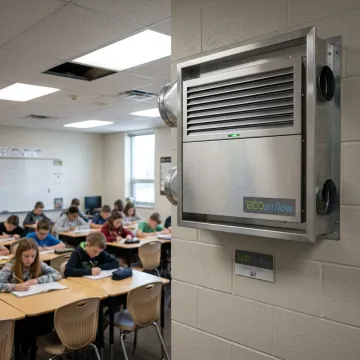
No. All ECOairflow products are ETL-certified to the UL 2998 Zero Ozone Verification standard, meaning ozone emissions are below 0.0005 ppm — effectively zero. They exceed ozone standards set by the US FDA, EPA, NIOSH, OSHA, and California CARB, and are recommended by the US CDC and EPA for use in occupied spaces including homes, hospitals, and schools.
Can ECOairflow filters capture wildfire smoke and viruses?
Yes. Using patented Electronic Polarization Technology (EPT), ECOairflow filters capture particles as small as 0.001 microns — well within the size range of wildfire smoke (black and organic carbon), viruses, bacteria, and traffic-related ultra-fine particulates. Lab testing confirms 74.73% capture of PM0.1 particles, making them especially valuable for households in wildfire-prone regions or with vulnerable occupants.
Are ECOairflow filters compatible with my existing HVAC system?
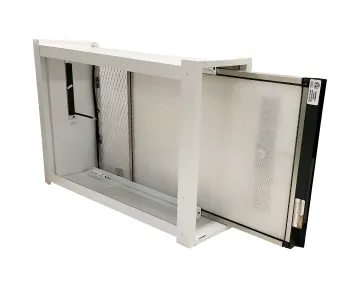
ECOairflow residential models (Model 1000, 1500, Dynamo 1") connect to the standard 24V floating input found on virtually all forced-air furnaces and air handlers in the US and Canada. They are available in all industry-standard furnace cabinet sizes plus custom sizing. Commercial models (Model 2300, M-Series) fit existing aluminum frames and support daisy-chain 24V deployment for multi-unit installations.