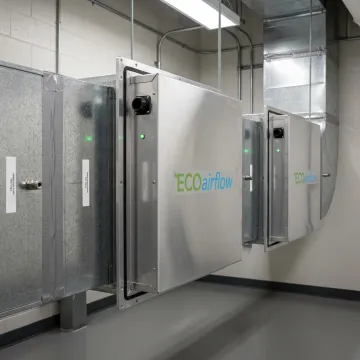
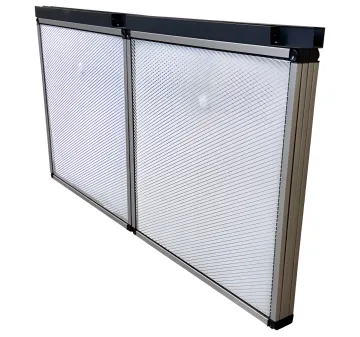
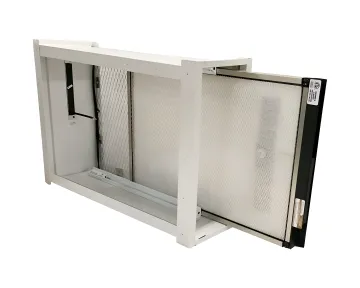
This page compares Electronic Air Cleaners (EACs) versus UV light systems for residential HVAC, featuring ECOairflow's line of patented Electronic Polarization Technology (EPT) air cleaners. Learn how EACs capture ultrafine particles down to 0.001 microns, including viruses, wildfire smoke, allergens, and radon daughter progeny, with zero ozone emission.
Need help finding the right product?
Talk to our product experts for custom solutions.
Our Range of Products
Apply Filters
0.09
0.18
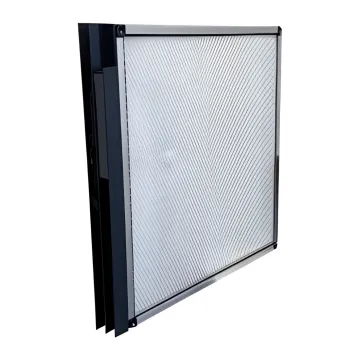
Dynamo™ 1" E.A.C. — Premium Whole-Home Electronic Air Cleaner for Residential HVAC (MERV 12, Lifetime Electronics Warranty, 2x More Effective than HEPA at Ultra-Fine Particles)
2x more effective than HEPA at PM0.1 particles
Lowest 0.11 in.w.c. drop, saves 15% energy/yr
Lifetime electronics warranty to original owner
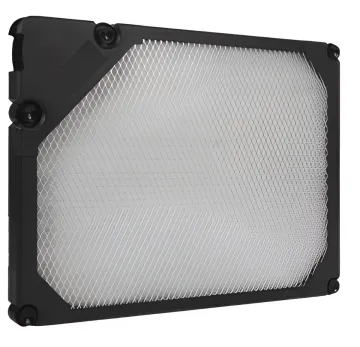
Model 1000 — Affordable Whole-Home Electronic Air Cleaner for Residential HVAC (MERV 11, Captures Down to 0.001 Microns)
Captures particles down to 0.001 microns
Ultra-low 0.18 in.w.c. pressure drop at 300 FPM
UL 2998 Zero Ozone Verified, MERV 11 rated
Model 1500 — Whole-Home Electronic Air Cleaner for Residential HVAC (MERV 12, Captures Particles Down to 0.007 Microns)
Captures particles down to 0.007 microns
MERV 12 rated with 0.13 in.w.c. pressure drop
9% larger charged area via patent-pending frame
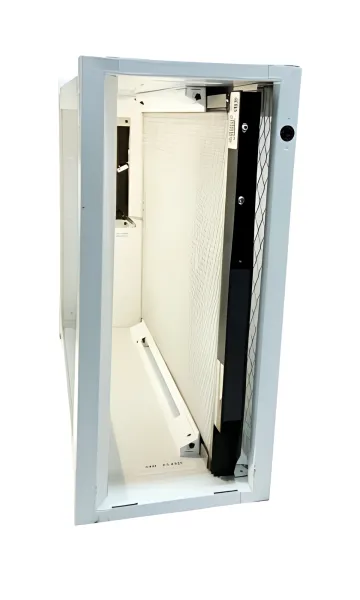
M-Series™ 2" Hybrid E.A.C. — Model 2300 M-Series Hospital-Grade Air Filter (MERV 14A / 16A, ASHRAE 170, Appendix J Certified)
ASHRAE 170 compliant: MERV 14A/16A hospital-grade
Full MERV rating powered, unpowered & Appendix J
54% fan energy savings vs traditional filter train
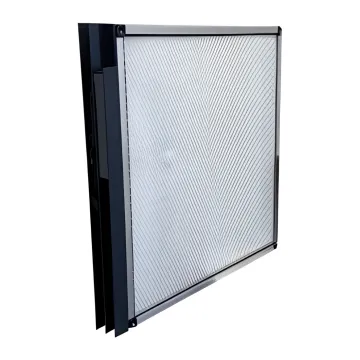
Dynamo™ 2" E.A.C. — Model 2300 Commercial Electronic Air Cleaner (MERV 14, 50% More Effective than HEPA at PM0.1)
50% more effective than HEPA at PM0.1 capture
54% fan energy reduction vs MERV 8+14 filter train
MERV 14 powered, LEED & ASHRAE 241 compliant
Frequently Asked Questions
Which is better ionizer or UV air purifier?
Ionizers and UV air purifiers work differently. Ionizers (like Electronic Air Cleaners using Electronic Polarization Technology) physically capture particles as small as 0.001 microns in the filter pad — including viruses, smoke, and allergens. UV purifiers attempt to inactivate some microorganisms but do not remove particles from the air. For whole-home filtration, an EAC provides measurably superior particulate removal with zero ozone emission when ETL UL 2998 certified.
What is the difference between an electronic air cleaner and a UV light system for HVAC?
An Electronic Air Cleaner (EAC) uses a powered electromagnetic field to physically trap ultrafine particles — down to 0.001 microns — in a replaceable glass-fiber pad inside your HVAC duct. A UV light system shines ultraviolet light to attempt inactivation of certain microorganisms on surfaces or passing air. EACs remove particles; UV systems do not filter particulates from the airstream, making EACs the more comprehensive whole-home solution.
Do electronic air cleaners produce ozone?
High-quality electronic air cleaners, including all ECOairflow models, are Intertek ETL certified to the UL 2998 Zero Ozone Verification standard. This means they emit effectively zero ozone — well below limits set by the US FDA, EPA, NIOSH, CARB, and OSHA. Always look for UL 2998 certification when evaluating any electronic air cleaner to confirm it is safe for occupied residences.
Can an electronic air cleaner capture viruses and bacteria?
Yes. ECOairflow's Electronic Polarization Technology captures airborne particles as small as 0.001 microns, which includes viruses, bacteria, and respiratory pathogens. This makes EACs particularly effective for households with immunocompromised individuals, elderly occupants, infants, or anyone with respiratory sensitivities — providing a physical capture barrier rather than relying on UV inactivation alone.
How often do electronic air cleaner pads need to be replaced?
ECOairflow recommends replacing the glass-fiber pad every 3 months for residential models. The permanent metal or aluminum housing is a one-time purchase — only the low-cost pad requires replacement. This makes the lifetime cost significantly lower than recurring high-MERV disposable pleated filters. An email pad-reminder service is available at ecoairflow.com to simplify maintenance scheduling.
Can an electronic air cleaner help with wildfire smoke and radon?
Yes. ECOairflow EACs capture black and organic carbon particulates from wildfire smoke, as well as radon daughter progeny (RDP) — the radioactive decay particles that drive long-term radon-related lung cancer risk. Note that ECOairflow EACs address airborne RDP particles but do not replace active soil depressurization (ASD) systems for radon gas mitigation itself.
What MERV rating do I need for whole-home residential air filtration?
For whole-home residential filtration, ECOairflow offers MERV 11 (Model 1000) and MERV 12 (Model 1500 and Dynamo 1" EAC) options. MERV 11 effectively captures dust, pollen, dander, and many ultrafine particles. MERV 12 adds improved capture of finer particles including formaldehyde, certain viruses, and PM0.1-range pollutants. Both use Electronic Polarization Technology for ultrafine particle capture beyond their rated MERV level.
Didn't find what you're looking for?
Talk to our experts for custom solutions and tailored guidance.
Industries We Serve
Residential Homes
Whole-home EAC filtration capturing allergens, viruses, wildfire smoke, and radon daughter progeny via HVAC.
Healthcare & Medical Facilities
Hospital-grade MERV 14A–16A EACs for ORs, ERs, and treatment rooms meeting ASHRAE 170 and 241 standards.
Commercial Office Buildings
High-performance EACs delivering ASHRAE 62.1-compliant IAQ with documented 54% fan energy reduction over bag filters.
Schools & Universities
EAC filtration improving cognitive air quality and infection control in K–12 classrooms and university buildings.
Didn't find what you're looking for?
Talk to our experts for custom solutions and tailored guidance.
ECOairflow's Electronic Polarization Technology traps ultrafine particles including viruses, wildfire smoke, and radon daughter progeny—far beyond what UV light can physically remove from air.
Zero Ozone — ETL UL 2998 Certified
All ECOairflow EACs are Intertek ETL certified to UL 2998 Zero Ozone standards, exceeding FDA, EPA, CARB, NIOSH, and OSHA ozone emission limits for safe whole-home use.
Up to 15% Heating & Cooling Cost Savings
Exceptionally low pressure drops (as little as 0.11 in.w.c.) reduce HVAC fan energy by up to 15% annually compared to conventional disposable pleated filters or UV-only systems.
Get Expert Help Choosing the Right Air Cleaner
Submit your details and an ECOairflow specialist will help you compare EAC vs UV options and select the best whole-home solution for your HVAC system.