What is PM 2.5 on an air filter?
PM2.5 refers to fine particulate matter 2.5 microns or smaller in diameter — including wildfire smoke, traffic pollution, bacteria, and viruses. On an air filter, the PM2.5 rating indicates how effectively the filter captures these tiny particles. ECOairflow filters using Electronic Polarization Technology capture particles as small as 0.001 microns, far exceeding the PM2.5 threshold and providing comprehensive protection against harmful ultrafine pollutants.
What MERV rating do I need to filter PM2.5 particles?
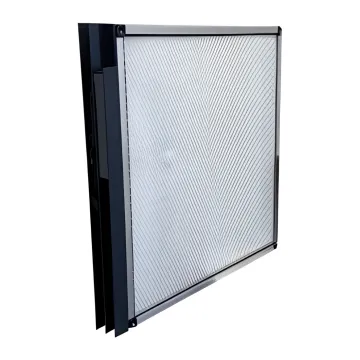
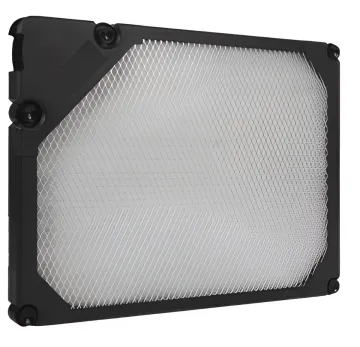
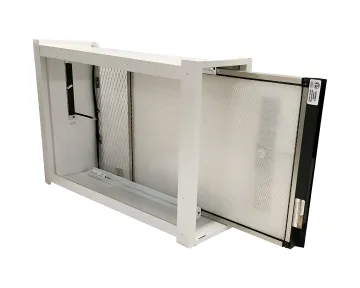
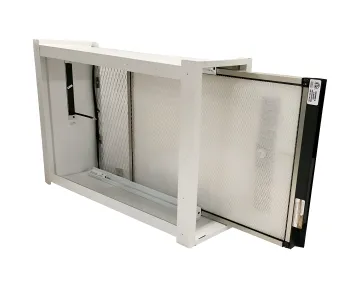
MERV 11 or higher is generally recommended to capture PM2.5 particles. ECOairflow's residential lineup starts at MERV 11 (Model 1000) and goes up to MERV 12 (Model 1500, Dynamo 1"), while commercial models reach MERV 14 to MERV 16A. All models use Electronic Polarization Technology (EPT), which captures particles down to 0.001 microns — well below the 2.5-micron PM2.5 threshold.
Are ECOairflow filters safe for homes with children, pets, or asthma sufferers?
Yes. All ECOairflow filters are UL 2998 Zero Ozone Verified by Intertek ETL, meaning ozone emissions are below 0.0005 ppm — exceeding FDA, EPA, CARB, NIOSH, and OSHA standards. They are specifically designed to be safe for occupied homes with pets, children, elderly occupants, and those with asthma or respiratory sensitivities, producing no harmful ozone byproducts.
How often do ECOairflow filter pads need to be replaced?
Replacement pads are recommended every 3 months for residential applications and every 3–6 months for commercial use depending on load conditions. ECOairflow offers a pad subscription and email reminder service at ecoairflow.com/email-reminders. Unlike disposable pleated filters, only the replaceable glass-fiber pad needs periodic replacement — the permanent aluminum or metal housing is a one-time capital investment.
Can ECOairflow filters capture wildfire smoke?
Yes. ECOairflow's Electronic Polarization Technology captures black and organic carbon particles from wildfire smoke, including sub-micron PM2.5 and PM0.1 size fractions associated with forest fire smoke. Residential models (Model 1000, 1500, Dynamo 1") are specifically recommended for US households in smoke-affected regions such as California, the Pacific Northwest, and Rocky Mountain states.
What is the difference between the residential and commercial ECOairflow models?
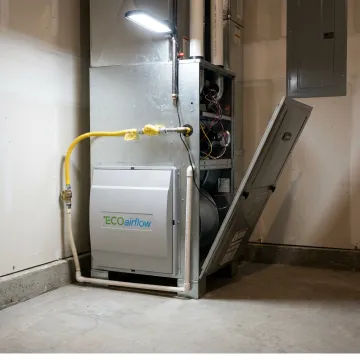
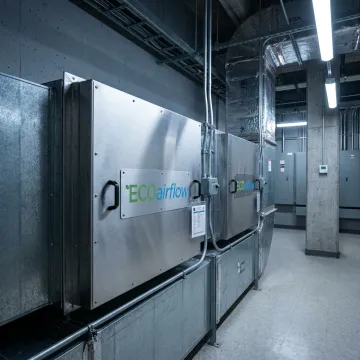
Residential models (Model 1000, Model 1500, Dynamo 1") are 1-inch electronic air cleaners rated MERV 11–12, designed for standard home HVAC systems at 24V. Commercial models (Dynamo 2" Model 2300, M-Series 2300) are 2-inch units rated MERV 14–16A, engineered for 500 FPM commercial air handlers, hospitals, schools, and facilities requiring ASHRAE 62.1, 90.1, 170, and 241 compliance.
Do ECOairflow filters qualify for LEED or green building credits?
Yes. The commercial Dynamo 2" Model 2300 and M-Series Hybrid filters qualify for credits under USGBC/LEED, WELL Building Standard, ILFI, National Green Building Standard (NGBS), and Passivehaus programs. Their low pressure drop supports ASHRAE 90.1 fan-power compliance, while UL 2998 Zero Ozone certification and recyclable glass-fiber pad materials support LEED EQ and Materials & Resources credits.